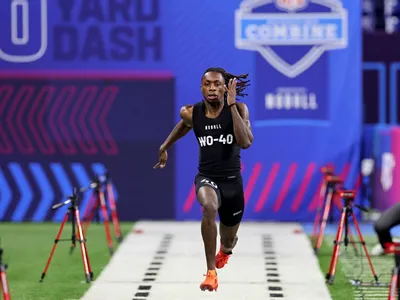
Explore a decade of NFL Combine data to see why 40-yard dash times rarely predict First-Round draft success or long-term NFL careers
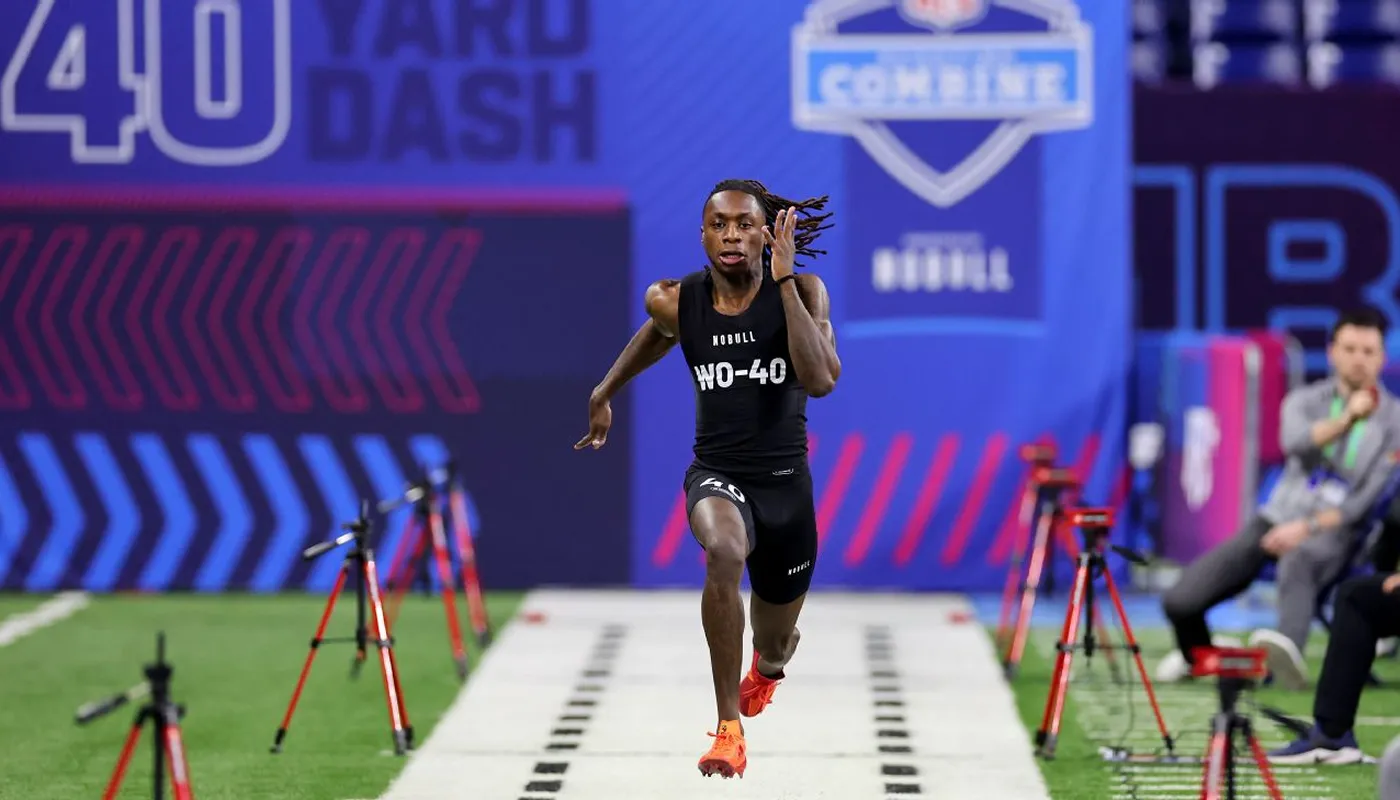
No, combine 40 times don't predict round 1: What a decade of draft data shows
Every February, hundreds of college football players sprint 40 yards in front of stopwatches, scouts, and a national television audience, and every February the same question gets asked. Does any of it actually matter?
The NFL Scouting Combine has turned into a made-for-TV event, complete with slow-motion replays and breathless commentary about hundredths of a second.
But when you go back and actually look at what happened to the guys who ran the fastest times, and to the ones who ran the slowest, the picture gets a lot messier than the broadcast makes it seem.
This isn't a new debate. Scouts, coaches, and front office types have argued about nfl combine 40 times for decades. Some swear a blazing sprint tells you everything about a player's ceiling. Others treat it as barely more than a party trick. So which side is right? The answer, based on a decade or more of draft outcomes, leans hard toward the skeptics.
🏈 Why the 40 time became such a big deal

The 40-yard dash isn't even a distance that shows up much in an actual football game. Most plays are decided in the first 10 to 15 yards, where acceleration and burst matter far more than top-end speed. Yet somehow this one drill became the headline event of the entire combine, probably because it's simple, it's visual, and it produces a number anyone can compare across positions and eras.
That same obsession with a single number is exactly why combine week now drives so much early betting buzz, with fans checking props and draft futures on the BetFury platform before a single pick has even been made.
Cameras zoom in. Announcers gasp. A tenth of a second becomes a talking point for weeks. And then the draft happens, and reality has a habit of ignoring the hype.
Take Tom Brady. At the 2000 combine, he ran a 5.28-second 40, one of the slowest times ever recorded by a quarterback at the event and, at the time, the second-slowest among all quarterbacks in that class behind Louisville's Chris Redman. He also posted a modest 24.5-inch vertical leap. Brady wasn't picked until the sixth round, 199th overall. Seven Super Bowl rings later, nobody remembers his 40 time as predictive of anything except how little it can mean.
⚡ The flip side: when speed doesn't translate either

If a slow 40 didn't stop Brady, a blazing one didn't guarantee stardom for John Ross. In 2017, the Washington wide receiver ran a 4.22-second 40 at the combine, an official record that still stands today. It was electric. It was the kind of moment that gets replayed on NFL Network for years.
The Cincinnati Bengals took Ross with the ninth overall pick that spring, betting big on that one drill and the ceiling it implied.
The bet didn't pay off the way Cincinnati hoped. Injuries piled up, target shares stayed thin, and Ross bounced between a handful of rosters before his career wound down quietly. Two players, two extremes on the stopwatch, two outcomes that flip the expected script entirely. That's not a coincidence so much as a pattern that keeps repeating.
📌 A quick side note on positions
Here's a wrinkle worth mentioning, because it never gets enough attention: the 40 time seems to matter more for some positions than others. Cornerbacks and wide receivers, where straight-line speed shows up constantly in coverage and separation, tend to have a slightly tighter link between combine speed and early playing time.
Offensive linemen? Quarterbacks? Not so much. A left tackle's 40 time is basically irrelevant to whether he can anchor against a bull rush.
📊 What the numbers actually look like
Look at first-round picks from recent draft classes and sort them by 40 time versus career outcome (measured loosely by whether they became multi-year starters), and the correlation is weak at best.
| Player | Position | Combine 40 time | Draft position | Outcome |
|---|---|---|---|---|
| Tom Brady | QB | 5.28 | 199 (6th rd, 2000) | Hall of Fame trajectory |
| John Ross | WR | 4.22 | 9 overall (2017) | Short, injury-hit career |
| Mid-tier OL prospects | OL | Rarely tested top speed | Round 1-2 | Mixed, hinges on technique |
| Elite CB prospects | CB | Often sub-4.4 | Round 1 | Somewhat stronger link |
That table isn't exhaustive, obviously. But it lines up with what scouts who've been doing this a while will tell you off the record: the tape matters more than the track meet. A scout can watch three seasons of game film and see how a player reacts to real contact, real coverage, and real pressure.
A 40 time captures maybe four seconds of a controlled, no-pads sprint in shorts.
So does the combine matter at all? It's not nothing. Medical checks, interviews, and even some drills (change of direction stuff, mostly) can shift a team's confidence. But treating the 40 as gospel is where teams get burned.
📈 Why fans and bettors still obsess over it

And yet the hype machine keeps rolling every year, because a fast time is easy to sell and easy to talk about on a Tuesday morning radio show. Bettors watch closely too, since combine buzz shapes early draft odds and futures markets well before the actual nfl draft date arrives in late April.
Prop markets on draft position and team fits have grown into their own mini-industry.
Some fans like to follow the betting angle on actual regular-season action too, and for those tracking odds once games kick off, NFL Bitcoin Betting options give a crypto-friendly way to follow lines throughout the season. It's a different beast than combine prop bets, obviously, since real football results replace 40-yard sprints as the thing being measured.
One more wrinkle for anyone newer to the sport: American football rules and structure vary quite a bit outside the US, something covered well in this breakdown of rule differences across countries, which helps explain why some international viewers find the combine spectacle itself a little baffling. Nowhere else in global sports does a job interview involve quite so much sprinting in tight compression shorts.
🏷️ A few names worth remembering

Beyond Brady and Ross, a handful of combine outliers get brought up whenever this argument flares up on social media. Consider a short list of the ones scouts still reference:
- Quarterbacks with pedestrian speed who became elite pocket passers anyway, because arm talent and processing speed don't show up in a sprint.
- Skill players whose blazing 40 times never translated into consistent route-running or hands.
- Defensive linemen whose get-off and hand technique mattered far more than their straight-line number.
- Offensive tackles who tested poorly athletically yet anchored playoff lines for a decade.
None of that means speed is worthless. A track star with zero football instincts still won't make it. But raw time on a stopwatch, in isolation, keeps failing as a crystal ball.
🎯 So what should teams actually trust?
Film study, medical history, and character evaluation still carry more predictive weight than any single workout number, according to most personnel executives who've spoken on the record over the years. The combine gives teams useful supplemental data, sure. It's just not the headline it plays as on television.
Maybe that's the real lesson from a decade of watching this play out. The stopwatch tells you how fast someone ran in shorts on a random Saturday in Indianapolis. It doesn't tell you whether that same person will read a blitz correctly in Week 14 of a playoff push.
Those are two very different questions, and only one of them actually decides games.
¿Qué es un Handbike para silla de ruedas?
Una handbike es una bicicleta impulsada por los brazos en lugar de las piernas. Suele ser utilizada por personas con discapacidades físicas, especialmente en sillas de ruedas , ya que les permite mantenerse activos y desplazarse
Otras noticias: